



Blog > All
Red Light Therapy For Neck Wrinkles
Written by Our Editorial Team
6 min read
Share this article:


00
DAYS D00
HOURS H00
MINUTES M00
SECONDS SBlog > All
Written by Our Editorial Team
6 min read
Share this article:

Noticing your neck age faster than your face can feel unexpectedly personal, especially when lines linger longer each morning, and makeup settles into creases you never used to see.
It is often in this moment that we start looking for treatments like red light therapy for neck wrinkles – something gentle, clinically grounded, and capable of supporting real change in one of the most delicate areas of the body.
Before you decide whether this approach is right for you, it helps to understand why the neck shows wrinkles so quickly and what makes this area uniquely responsive to targeted skincare technology.
What this article covers:
Your neck has thinner skin, fewer oil glands, and constant movement, so it often shows age before the face. Add years of sun exposure and a phone that keeps your head tilted down, and lines that once only appeared when you turned or smiled can start to settle in permanently.
Dermatologists often talk about three main patterns of neck aging.
Each pattern ties back to collagen loss, chronic UV-induced microinflammation, and mechanical stress. Fine lines and crepiness respond best to collagen-supportive routines, including topical retinoids, peptides, daily sunscreen, and energy-based treatments like red light therapy.
Heavier sagging or pronounced vertical bands usually need in-office procedures, but even then, consistent skin support can enhance results and help maintain them longer.

Red light therapy, also called low-level light therapy or photobiomodulation, uses precise wavelengths of visible red and near infrared light to influence how skin cells function.
It does not burn, ablate, or peel the surface. Instead, it delivers nonheating light energy that your cells can absorb and convert into signals for repair.
In the skin, this light energy reaches the mitochondria, the tiny power centers inside cells. When those structures absorb specific wavelengths, they can produce more adenosine triphosphate (ATP), the fuel your cells use for tasks such as collagen synthesis and barrier repair.
Studies also suggest red and near infrared light can reduce oxidative stress, modulate inflammatory pathways, and support healthier microcirculation.
For you, that science translates into a treatment that feels gentle but still works at a biological level.
Decades of photobiomodulation research, spanning wound healing, oral surgery, and dermatology, show that specific red and near-infrared wavelengths can support collagen, soften wrinkles, and improve overall skin quality.
Controlled facial and periocular studies, including trials reporting up to a 30 percent reduction in wrinkle volume, matter for the neck because the same fibroblast-rich dermal structures respond to light-based signaling.
To summarize what the research suggests, consistent use of clinically relevant wavelengths may help:
A red light neck mask for wrinkles shows up consistently in clinical literature as a gentle, low-downtime option that supports the skin's natural repair processes. It can meaningfully improve texture and firmness when used consistently.
And if concerns such as early laxity or a visible under-chin shadow are also on your mind, you may wonder whether red light therapy for double chin offers similar benefits.

Red light therapy works with the skin's natural repair systems rather than forcing change through heat or injury. Its effects tend to build gradually through biological processes that reinforce one another.
With consistent use, photobiomodulation may:
These mechanisms work best when paired with habits you already know matter: broad-spectrum sunscreen, a fragrance-free anti aging serum, and a routine you can maintain without irritation.
At-home results depend on consistency, correct dosing, and a device that sits close enough to the skin to deliver therapeutic wavelengths evenly.
A dedicated red light neck mask offers the most reliable coverage because it contours to the neck and décolletage, an area where handhelds or face-only masks often leave gaps.
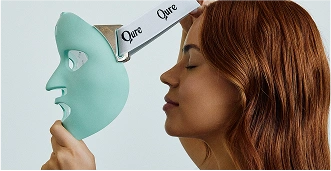
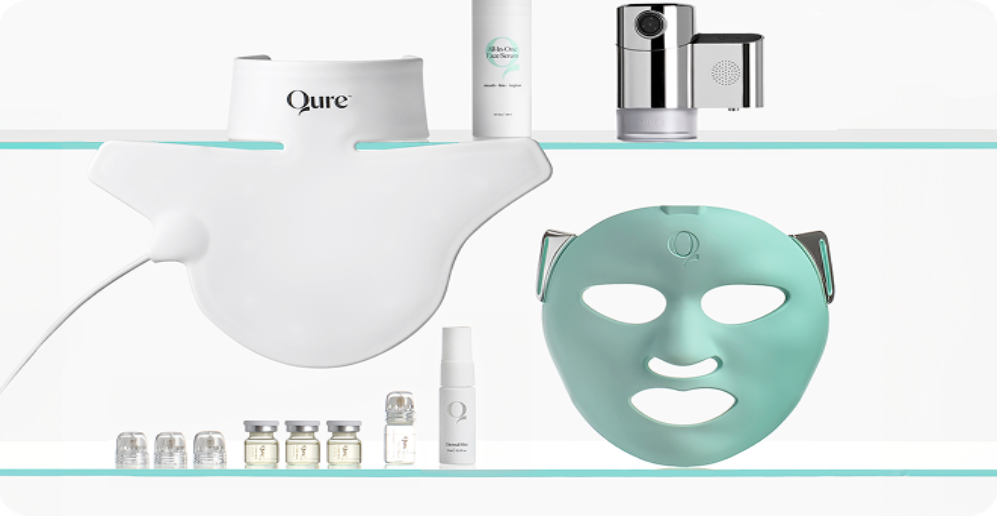
If you already use Qure's red light mask for your face, pairing it with the neck device can create a seamless treatment field from the hairline to the chest.
Below is a routine that reflects how most users can incorporate red light therapy into a gentle, effective neck regimen while still supporting the barrier:
Avoid applying thick balms, heavy occlusives, or reflective mineral layers right before treatment, since these can block or scatter light. Follow the device instructions to protect your eyes, and avoid looking directly into active LEDs at close range.

With photobiomodulation, more is not always better. Cells respond best to a “sweet spot” of energy where signaling is optimized.
Most home users do well with short, consistent sessions several times a week rather than daily marathons. Overuse can create diminishing returns or temporary flushing in very reactive skin.
Qure's schedules are designed to respect that dose response curve, so trust the built-in program instead of stacking extra sessions. Think of your neck routine like strength training: progress builds over weeks of steady, appropriate work, not one intense day.
For most users, the key changes show between 8 and 12 weeks of regular use.
“After two weeks, I began to see results, and after six weeks, the changes in my skin were dramatic…I bought masks for my daughters for Christmas so they could start at a younger age. I wish this technology had been available when I was younger.” – Terri P. (Verified Customer)
At that point, you may see:
Because the neck moves constantly, day-to-day observation can be unreliable. A simple tracking ritual makes the process more objective.
Once a week, stand in the same spot, at the same time of day, with the same lighting and chin position. Take photos from the front and each side without filters, then save them in a dedicated album.
You can also keep a short checklist in your phone with items such as “neck feels tight on waking,” “powder settles into lines,” or “neck and chest match facial tone.” Revisit it every month to see how your answers shift. This clinical mindset helps you separate real change from wishful thinking.

Neck rejuvenation works best as a layered plan. Topicals, energy-based devices, and in-office procedures each address different aspects of aging skin.
Retinoids, peptides, and daily sunscreen create the foundation. They normalize cell turnover, help protect collagen from UV damage, and support day-to-day barrier health. Many people already use these on the face, but forget to bring them down to the bra line.
In the office, dermatologists may suggest radiofrequency tightening, microneedling, lasers, or fillers for deeper bands and structural folds. These options can produce more dramatic changes, although they usually involve cost, visits, and some downtime.
At home, red light therapy fills the space between basic skincare and procedures. It is noninvasive, quiet, and compatible with sensitive skin when used correctly.
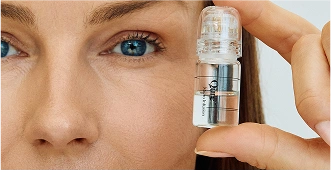
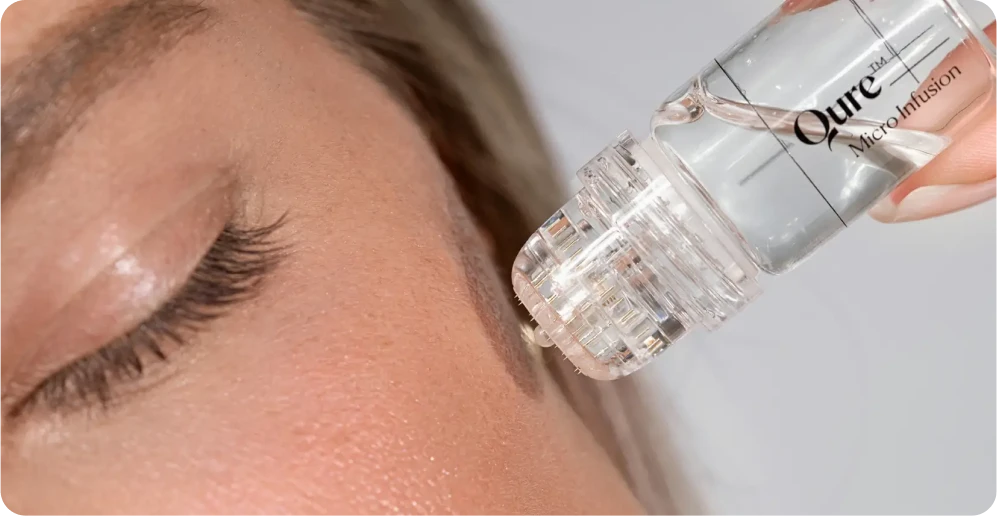
You can pair a neck device with Qure's micro infusion facial system for more targeted smoothing of fine lines on the lower face, or layer micro dart patches along stubborn necklace lines between light sessions for a precision boost.
When used at consumer-level doses, red light therapy is generally well tolerated across skin tones and types. Most people experience little more than a gentle warmth and a relaxed feeling during sessions.
Home LED panels and masks avoid the ablative damage and recovery time associated with more aggressive lasers.
Still, every treatment has boundaries. You should use caution or seek medical guidance if you have:
If you live with thyroid disease or take thyroid medication, it is sensible to talk with your endocrinologist or primary clinician before centering the light directly over the gland.
Many practitioners advise keeping the device slightly lower on the neck or limiting exposure over the thyroid area for peace of mind.

Our red light neck mask is FDA-cleared and dermatologist-approved, giving you the confidence that the device meets strict standards for safety and performance.
Because the neck is thinner and more reactive than the face, we design our LED systems to deliver controlled, low-heat wavelengths that are appropriate for sensitive skin and safe for consistent at-home use.
Every device goes through evaluations to ensure stable light output, comfortable wear, and reliable performance, which is especially important in an area that can flush or feel irritated quickly.
Our goal is simple: a treatment that feels gentle, remains steady throughout the session, and supports long-term skin health without overwhelming the barrier.
Pairing your session with our soothing hypochlorous acid spray or following with a hydrating anti aging serum can also help the neck stay calm and supported without interfering with LED performance.
Your neck deserves the same strategy you already give your face: daily protection, thoughtful actives, and technology that respects both science and sensitivity.
For many people, red light therapy offers a science-backed way to support smoother, firmer-looking skin at home, especially when fine lines and crepey texture are your main concerns rather than deep structural folds.
At Qure, we believe modern beauty should not force you to choose between clinical integrity and everyday ease.
Our at-home LED systems, including the red light neck mask and red light mask, are FDA cleared where applicable, dermatologist-approved, and intentionally tested on sensitive skin, not just ideal complexions.
Paired with science-led formulas such as our micro infusion facial system and hypochlorous acid spray, they form a complete, intelligent neck and face routine that helps your results last beyond a single selfie.
Read more about targeted skincare topics:
Most Popular Posts

#All
December 16, 2025
6 min read
Red Light Therapy For Keloid Scars
Read More
#All
December 08, 2025
6 min read
Red Light Therapy For Macular Degeneration
Read More
#All
November 30, 2025
6 min read
Red Light Therapy For Warts
Read More
#All
November 25, 2025
6 min read
Red Light Therapy For Neck Wrinkles
Read More
#All
November 18, 2025
6 min read
Red Light Therapy For Double Chin
Read More
#All
November 12, 2025
6 min read
Red Light Therapy For Fibroids
Read More
#All
November 06, 2025
6 min read
Red Light Therapy for Dark Spots
Read More
#All
October 31, 2025
6 min read
Red Light Therapy for Fungal Infections
Read More
#All
October 24, 2025
6 min read
Red Light Therapy for Dark Circles
Read More
Free Worldwide Shipping
Enjoy free delivery when you spend $100 USD or more.
Free shipping on orders over $100 USD.

Easy 30-Day Returns
Easy 30-Day Returns
Changed your mind? Return it within 30 days for a refund.
Return your items within 30 days for a full refund.

Qure Rewards
Earn points every time you shop for exclusive gifts and discounts.
Earn points for exclusive perks with every purchase

24/7 Customer Support
Our team is ready to help you, anytime you need.
Have a question? Our team is here to help.
00
DAYS D00
HOURS H00
MINUTES M00
SECONDS S
Fill it with amazing skincare.
 Even my esthetician is hooked!


