



Blog > All
Red Light Therapy For Macular Degeneration
Written by Our Editorial Team
6 min read
Share this article:


00
DAYS D00
HOURS H00
MINUTES M00
SECONDS SBlog > All
Written by Our Editorial Team
6 min read
Share this article:

Red light therapy for macular degeneration has become a real medical option for some people with dry age-related macular degeneration. That shift is both hopeful and understandably confusing.
If you are living with AMD, you are not just watching your vision change. You are adjusting how you read, drive, work, and recognize the faces you love. When a new therapy appears, you deserve a clear explanation that respects your intelligence and your nerves.
This guide covers what photobiomodulation (PBM) is, what the newest clinical evidence shows, who it may help, and why safe delivery matters.
What this article covers:
Age-related macular degeneration is a disease that affects the macula, the small central area of the retina that controls sharp, detailed vision.
When the macula loses function, central vision blurs, and straight lines may look distorted, while side vision often stays intact. These changes are subtle at first, but they can become disruptive in ways that feel unfairly sudden.
Clinicians divide AMD into two main types.
AMD also moves through stages. Early dry AMD may cause no symptoms. Intermediate dry AMD often causes noticeable blur, waviness, or trouble reading in low light. Geographic atrophy represents advanced dry AMD.

In ophthalmology, red light therapy refers to photobiomodulation, a treatment that delivers specific wavelengths of visible and near-infrared light to retinal tissue.
red light therapy uses light energy to influence cellular signaling in a nonthermal way. The therapy targets mitochondria inside retinal cells, supporting energy production and helping regulate oxidative stress and inflammation.
This is not the same as red light in skincare. A skincare LED mask or panel emits broad light designed for superficial tissues like the dermis and epidermis.
Eye red light therapy systems use carefully calibrated wavelengths, intensity, and exposure patterns to reach the macula safely. Retinal tissue responds to doses with high sensitivity, so precision matters.
If you use red light for skin, keep using it only where it belongs: on skin.
Yes, within a specific medical scope. On Nov. 4, 2024, the FDA authorized marketing of a clinic-based red light therapy device for patients with dry age-related macular degeneration to improve vision. The FDA classified it as a Class II light-based device for dry AMD.
This authorization matters because it is the first FDA-authorized light-based treatment for vision loss in dry AMD. It also matters because it does not apply to red light in general. The evidence and approval belong to a specific clinical system delivered under professional supervision.
If you are interested in red light therapy, your retina specialist can tell you whether you fit the approved population and whether a provider is available near you.

Wet AMD requires direct control of abnormal blood vessel growth. Anti-VEGF injections remain the standard because they reduce leakage and protect photoreceptors.
Red light therapy is not approved as a replacement for wet AMD therapy, and the current clinical evidence does not support using it in place of injections.
Geographic atrophy is an emerging frontier. Researchers are exploring red light therapy in GA because mitochondrial support and inflammation modulation could, in theory, slow atrophic spread.
The evidence is early and less consistent, so clinicians tend to discuss red light therapy for GA cautiously and in the context of trials or broader management plans.
If you have GA or wet AMD, your retina specialist should guide any red light therapy discussion.
No, not as a do-it-yourself treatment. Do not shine consumer LEDs, flashlights, or skincare masks into your eyes to try to treat AMD.
The retinal studies and FDA authorization involve narrow-band, medically controlled devices with specific exposure parameters. Consumer devices are not tested for retinal use, and improper exposure can risk injury.
If you are curious about red light therapy, ask your retina specialist. They can tell you whether a clinical red light therapy system is appropriate for your stage and whether it is available to you.
A controlled clinic environment protects your retina and keeps treatment realistic.

The progress in retinal photobiomodulation highlights something powerful: light can support tissue in meaningful, measurable ways when it is used with the right device in the right place.
While your eyes belong firmly in the hands of a retina specialist, your largest organ, your skin, is where at-home red light technology can safely shine.
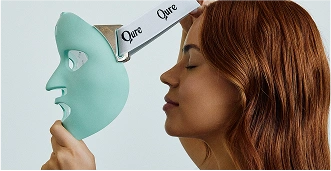
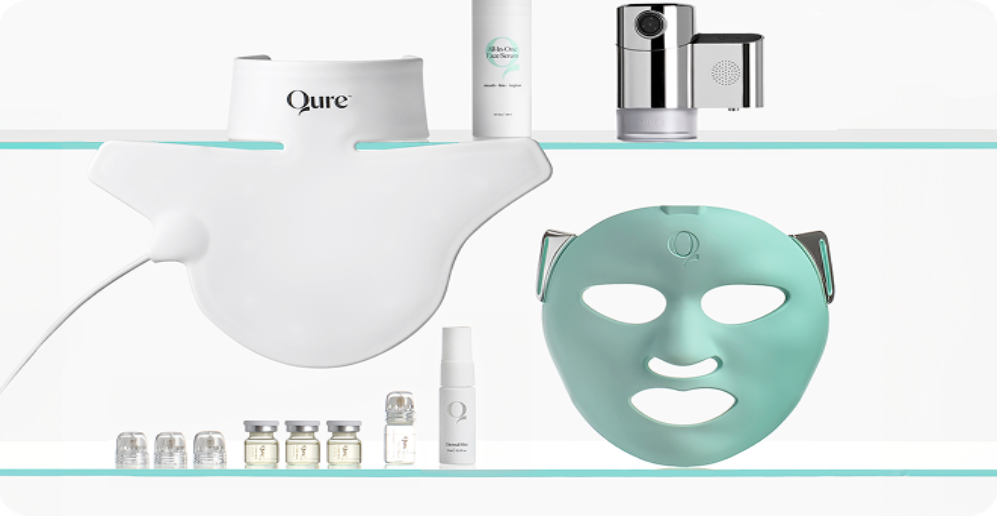
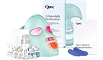
Qure's red light mask and red light neck mask bring clinic-inspired photobiomodulation into home skincare at a fraction of in-office costs.
Both devices are FDA-cleared for their intended skincare uses, dermatologist-approved, and designed for sensitive skin.
The neck device is especially popular for red light therapy for neck wrinkles, which makes it a natural fit for anyone building a disciplined, evidence-aware red light habit.
“After two weeks, I began to see results, and after six weeks, the changes in my skin were dramatic…I bought masks for my daughters for Christmas so they could start at a younger age. I wish this technology had been available when I was younger.” – Terri P. (Verified Customer)
Light therapy works best on skin when you pair it with formulas that respect your barrier.
The hypochlorous acid spray supports calm, balanced skin and has undergone independent repeat insult patch testing with no adverse reactions reported.
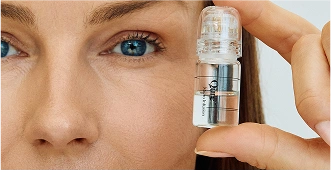
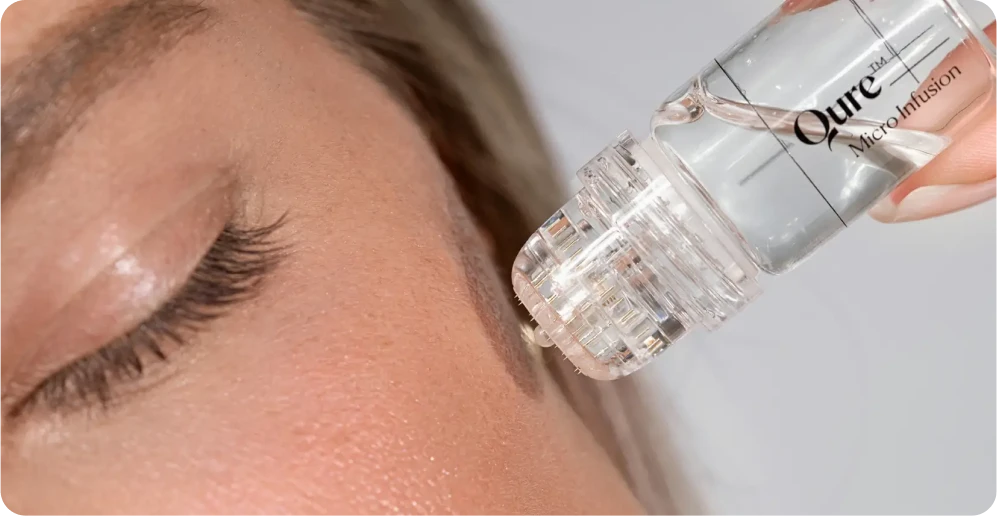
The micro dart patches and micro infusion facial system deliver targeted actives in a controlled, low-irritation way for people who want visible results without sacrificing comfort.
Your retina specialist decides whether clinic-based PBM belongs in your AMD treatment plan.
Qure stands beside that plan on the skincare side of your life, using the same science-first mindset to help your skin recover and age with integrity.
Red light therapy for macular degeneration is now a verified clinical option for intermediate dry age-related macular degeneration.
This therapy does not cure AMD, and it does not replace standard care for wet AMD. It is also not suitable for DIY home eye exposure. The safest and most effective way to consider red light therapy is through a retina specialist who can match the therapy to your stage and monitor your response over time.
At Qure, we take the same photobiomodulation science that is reshaping conversations about macular health and apply it safely to your skin.
Our red light mask and red light neck mask are FDA-cleared for skincare uses, dermatologist-approved, and carefully designed for even the most sensitive skin.
Read more about targeted skincare topics:
Most Popular Posts

#All
December 16, 2025
6 min read
Red Light Therapy For Keloid Scars
Read More
#All
December 08, 2025
6 min read
Red Light Therapy For Macular Degeneration
Read More
#All
November 30, 2025
6 min read
Red Light Therapy For Warts
Read More
#All
November 25, 2025
6 min read
Red Light Therapy For Neck Wrinkles
Read More
#All
November 18, 2025
6 min read
Red Light Therapy For Double Chin
Read More
#All
November 12, 2025
6 min read
Red Light Therapy For Fibroids
Read More
#All
November 06, 2025
6 min read
Red Light Therapy for Dark Spots
Read More
#All
October 31, 2025
6 min read
Red Light Therapy for Fungal Infections
Read More
#All
October 24, 2025
6 min read
Red Light Therapy for Dark Circles
Read More
Free Worldwide Shipping
Enjoy free delivery when you spend $100 USD or more.
Free shipping on orders over $100 USD.

Easy 30-Day Returns
Easy 30-Day Returns
Changed your mind? Return it within 30 days for a refund.
Return your items within 30 days for a full refund.

Qure Rewards
Earn points every time you shop for exclusive gifts and discounts.
Earn points for exclusive perks with every purchase

24/7 Customer Support
Our team is ready to help you, anytime you need.
Have a question? Our team is here to help.
00
DAYS D00
HOURS H00
MINUTES M00
SECONDS S
Fill it with amazing skincare.
 Even my esthetician is hooked!


