



Blog > All
Red Light Therapy For Fibroids
Written by Our Editorial Team
6 min read
Share this article:


00
DAYS D00
HOURS H00
MINUTES M00
SECONDS SBlog > All
Written by Our Editorial Team
6 min read
Share this article:

Red light therapy for fibroids is showing up in more conversations between patients, wellness practitioners, and clinicians, and for good reason.
If you live with fibroids, you have probably felt the gap between what you want, relief without losing control of your body, and what most treatments offer.
At Qure, we understand the desire for intelligent, noninvasive support. Our work starts in skin, but the philosophy carries farther: modern health decisions deserve clinical integrity, transparent evidence, and products designed for sensitive biology.
Before we talk about how light may help, let's get clear on what fibroids are and why they create such a wide range of symptoms.
What this article covers:
Uterine fibroids are common, benign growths made of smooth muscle and fibrous tissue that develop in or around the uterine wall.
They are not cancer, but they can still shape daily life in ways that feel exhausting, from long cycles to unpredictable pain.
Clinical reviews estimate that a meaningful portion of people with fibroids experience symptoms that affect health and quality of life – especially heavy menstrual bleeding and pelvic pressure.
Fibroids grow in different locations, and that placement often explains why two people with similarly sized fibroids can feel totally different.
Intramural fibroids sit within the uterine muscle. Submucosal fibroids expand toward the uterine cavity and often link to heavy bleeding. Subserosal fibroids press outward and may create bulk symptoms like pressure, bloating, or frequent urination.
Symptoms vary, but several patterns show up again and again in gynecology care.
Many people deal with periods that last longer than a week, bleeding heavy enough to soak through protection quickly, or clots that make leaving the house stressful.
Pelvic heaviness can mimic the feeling of constant fullness. Some people notice back pain, discomfort during sex, or urinary urgency because fibroids push against the bladder.
In fertility care, fibroids can interfere with implantation or pregnancy, depending on size and location.
Not every fibroid needs aggressive treatment. If the fibroids are small, stable, and not driving symptoms, many clinicians recommend watchful waiting paired with regular imaging.
When bleeding causes anemia, pain escalates, or fertility goals become urgent, treatment becomes less optional and more protective.

Red light therapy, also called photobiomodulation or PBM, uses low-level red and near-infrared light to influence cellular behavior.
Unlike heat-based devices, red light therapy works through nonthermal signaling. The light energy reaches tissue, interacts with mitochondria, and supports the cell's ability to produce adenosine triphosphate (ATP), the fuel that powers repair and regulation across the body.
In dermatology, red light therapy has a strong evidence base for supporting collagen production, calming inflammation, and improving skin recovery. That is why red light appears in many clinic-grade facial treatments and why it has become a major focus of at-home technology.
When people mention red light in the context of fibroids, they are usually talking about broad red light therapy effects that researchers have observed in other tissues: reduced inflammatory signaling, improved microcirculation, and downshifting of pain pathways.
These effects do not automatically mean fibroids shrink, but they offer a biologically plausible pathway for symptom support.
It also helps to separate at-home devices from clinical lasers. Clinics often use higher-powered, narrow-band systems delivered by trained providers. At home, most people use LED panels, handheld devices, or flexible wraps designed for wellness and skin.
The mechanism still relies on PBM, but dose and penetration vary, which matters when you are targeting deeper pelvic tissue.

If you are hoping for a noninvasive way to shrink fibroids, the most responsible answer today is that research has not confirmed that outcome in humans.
Gynecologic guidelines do not include photobiomodulation as a standard fibroid treatment, and current care still centers on medication, procedures, and surgery when symptoms require intervention.
No high-quality human randomized controlled trials have shown that red or near-infrared light therapy reliably reduces fibroid size. Researchers also have not established dosing, wavelength targets, or treatment schedules for fibroid shrinkage, which are the basics needed before any therapy becomes standard care.
That does not mean red light therapy is irrelevant; it only means the “shrinkage” claim is not evidence-based at this point. When you see statements that red light “melts” fibroids, treat them as unverified until clinical trials prove otherwise.
While fibroids have not been studied directly in robust trials, red light therapy is being explored in nearby terrain: pelvic pain and inflammatory gynecologic conditions. These studies matter because they show that pelvic tissues can respond to light-based cellular signaling, even if the target condition is different.
Researchers are currently running randomized, sham-controlled trials of transvaginal photobiomodulation for endometriosis-associated chronic pelvic pain. These trials are designed to measure whether red light therapy can reduce pelvic pain and improve function compared to placebo light exposure.
There are also larger triple-masked randomized trials underway evaluating near-infrared vaginal red light therapy for chronic pelvic pain more broadly. These studies will add much-needed clarity about symptom response, dosing, and safety in deep pelvic tissues.
Taken together, the pelvic red light therapy pipeline supports a cautious but reasonable hypothesis: if light can downshift pelvic pain pathways and local inflammation in endometriosis or chronic pelvic pain, it may also offer symptom support for some people with fibroids, even if it does not shrink them.

Photobiomodulation works through mitochondrial and immune-inflammatory signaling rather than heat or tissue destruction.
Red and near-infrared photons interact with mitochondrial cytochrome c oxidase, helping regulate ATP production, nitric oxide release, oxidative stress, and downstream inflammation.
Those effects are consistent with symptom areas many fibroid patients care about most: pain intensity, pelvic tenderness, and the internal “tightness” that can amplify discomfort.
Mechanism alone is never proof, but it helps explain why red light therapy is being studied across pain and inflammatory conditions, including in the pelvis.
Even without strong evidence for shrinkage, red light therapy may still play a supportive role for some people.
Inflammation and pelvic pain modulation sit at the center of the red light therapy hypothesis. Fibroids can drive local irritation, muscular guarding, and inflammatory cascades, especially when they push on surrounding structures.
Red light therapy has shown the ability to lower inflammatory markers and alter pain signaling in other settings, including pelvic pain studies. That may translate to less cramping or pressure for some users, though results will vary.
Light may also support muscle tension release. Chronic pelvic discomfort often leads to tightness in the lower abdomen and pelvic floor, which can amplify pain even when the fibroid size stays stable.
By improving local circulation and cellular energy, red light therapy may help tissues relax and recover more efficiently.
Better circulation is another plausible pathway. Fibroids can affect blood flow patterns in the uterus and create a sense of heaviness. PBM's microcirculatory support could theoretically ease that congested feeling.
Finally, some people report improvements in stress and sleep with regular red light therapy use. That matters because chronic fibroid symptoms can erode nervous system resilience.
If your sleep improves, your pain thresholds and hormonal stability often improve with it.

You can think of fibroid care in two buckets: symptom management and structural intervention.
Red light therapy belongs as a complementary wellness tool. It does not replace the treatments above, and it should not delay care when your symptoms signal risk.
Talk to your OB-GYN promptly if you notice any of the following:
Those signs need clinical attention regardless of what supportive tools you use at home.
If you and your clinician agree that red light therapy is reasonable as supportive care, keep the approach simple and externally focused.
Consumer red light therapy devices typically use red wavelengths in the 620 to 700 nanometer range and near-infrared wavelengths roughly between 700 and 900 nanometers. For pelvic support, follow your specific device instructions and start conservatively.
A practical routine often looks like several short sessions per week rather than marathon exposures. You are aiming for a steady nudge to cellular signaling, not an aggressive intervention.
As you use red light therapy, track symptoms the way a clinician would want you to track them:
A simple journal helps you spot meaningful changes without guessing.
Place the light over the lower abdomen, centered low in the pelvis. Wear comfortable clothing or expose the skin based on the device directions. If you feel heat, discomfort, or any new symptom flare, stop and reassess.

Qure's red light technology was built to bring dermatology-grade photobiomodulation into everyday life.
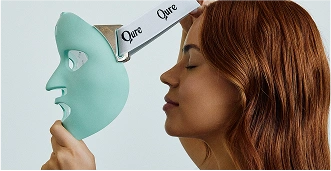
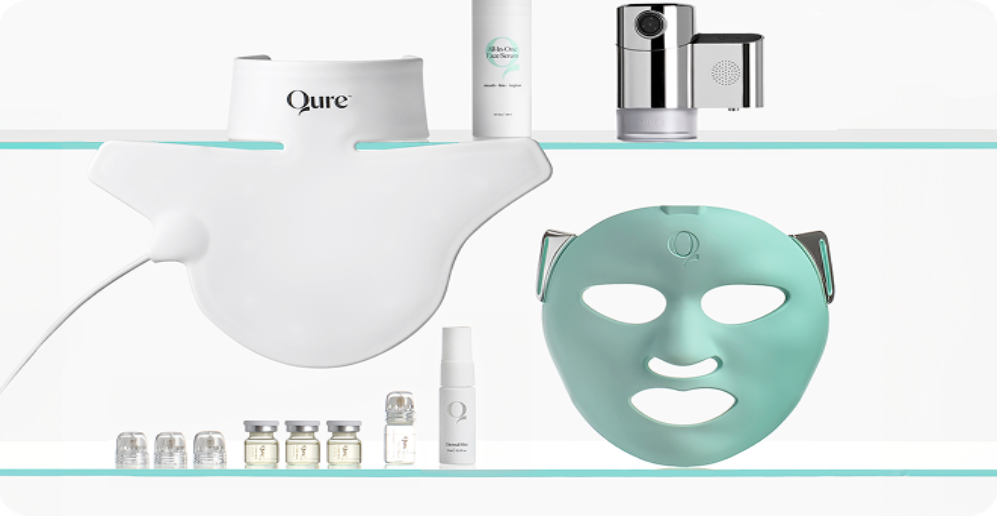
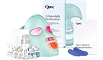
The Qure red light mask is FDA-cleared for treating wrinkles and mild to moderate inflammatory acne, which means it meets strict safety and performance standards for at-home LED use.
By design, it delivers red and near-infrared wavelengths that are widely used in PBM research for cellular energy support and inflammation modulation.
If you want to extend your light routine, the red light neck mask offers the same Qure approach in a format made for the neck and décolletage, areas where skin is thinner, more reactive, and often overlooked.
Qure developed this device with the same safety-first standards that guide our core line, so sensitive or easily inflamed skin can tolerate regular PBM use comfortably.
Fibroid care can feel emotionally and physically draining, especially when your body is already sensitive. Qure's philosophy is to support sensitive systems through evidence-aligned technology and careful testing.
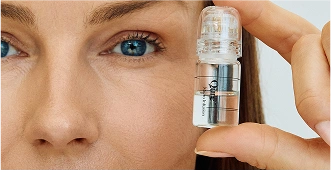
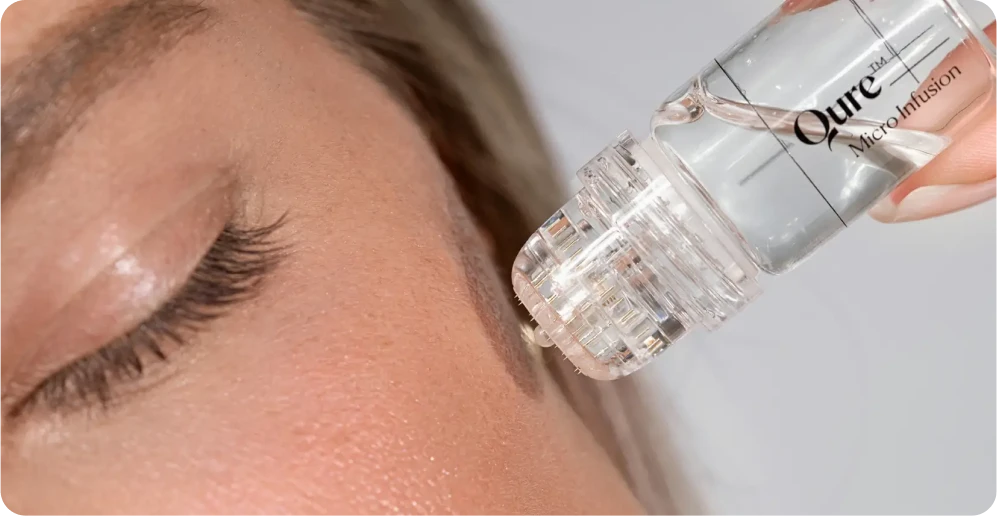
Our devices and formulations go through rigorous safety screening, including compatibility work for reactive skin types. Products like the hypochlorous acid spray and micro dart patches have undergone independent repeat insult patch testing with no adverse reactions reported, reinforcing our commitment to skin safety at every step.
Many customers first discover Qure through results-focused uses like red light therapy for neck wrinkles, and then continue using the same clinical-grade light technology as part of a broader wellness routine.
Fibroids can make you feel like your body is running the show without your consent. You deserve tools that restore a sense of partnership with your health.
Red light therapy for fibroids is promising as a comfort-focused, inflammation-aware support strategy, but it is not proven to shrink fibroids, and it should sit beside, not instead of, medical care.
The best results come when you treat red light therapy like a steady wellness input and keep your OB-GYN in the loop.
At Qure, we build at-home technology for people who want clinical rigor without clinical hassle.
Our red light mask and red light neck mask deliver clinic-inspired photobiomodulation in formats you can use consistently at home, including on areas beyond the face and neck when you choose to extend your routine.
Both devices are FDA-cleared for their skincare uses, dermatologist-approved, and designed with sensitive skin in mind.
That science-first mindset is the same mindset we encourage you to bring to fibroid care: choose what is evidence-aligned and never settle for hype in place of health.
Read more about targeted skincare topics:
Most Popular Posts

#All
December 16, 2025
6 min read
Red Light Therapy For Keloid Scars
Read More
#All
December 08, 2025
6 min read
Red Light Therapy For Macular Degeneration
Read More
#All
November 30, 2025
6 min read
Red Light Therapy For Warts
Read More
#All
November 25, 2025
6 min read
Red Light Therapy For Neck Wrinkles
Read More
#All
November 18, 2025
6 min read
Red Light Therapy For Double Chin
Read More
#All
November 12, 2025
6 min read
Red Light Therapy For Fibroids
Read More
#All
November 06, 2025
6 min read
Red Light Therapy for Dark Spots
Read More
#All
October 31, 2025
6 min read
Red Light Therapy for Fungal Infections
Read More
#All
October 24, 2025
6 min read
Red Light Therapy for Dark Circles
Read More
Free Worldwide Shipping
Enjoy free delivery when you spend $100 USD or more.
Free shipping on orders over $100 USD.

Easy 30-Day Returns
Easy 30-Day Returns
Changed your mind? Return it within 30 days for a refund.
Return your items within 30 days for a full refund.

Qure Rewards
Earn points every time you shop for exclusive gifts and discounts.
Earn points for exclusive perks with every purchase

24/7 Customer Support
Our team is ready to help you, anytime you need.
Have a question? Our team is here to help.
00
DAYS D00
HOURS H00
MINUTES M00
SECONDS S
Fill it with amazing skincare.
 Even my esthetician is hooked!


